Do it in this order: clear all waste first, then rake out matted thatch, then check drainage and compaction, then flush urine spots, then overseed, then treat for odor. Seeding or treating before the waste is cleared wastes both the seed and the treatment.
1. Clear every bit of waste first
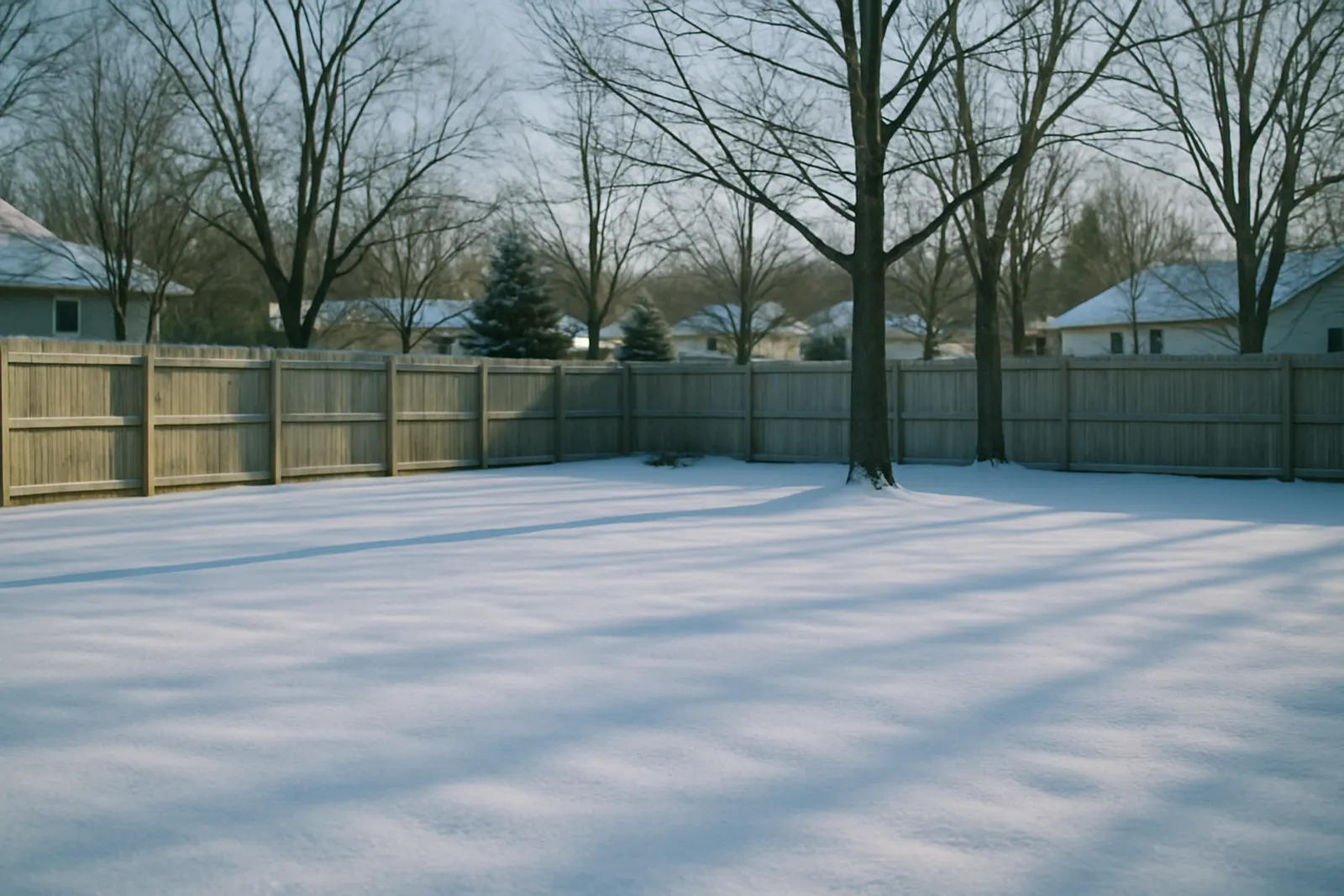
Nothing else on this list works until this is done. An Indiana winter stores four months of waste and releases it all in one warm week, and any raking, seeding or treating done before it is cleared just spreads the problem across the yard.
Work the whole property, not the middle. Fence lines, along the foundation, under the deck, behind the shed, and the beds — which is where the winter wind piled leaves on top of everything.
2. Rake out the matted thatch
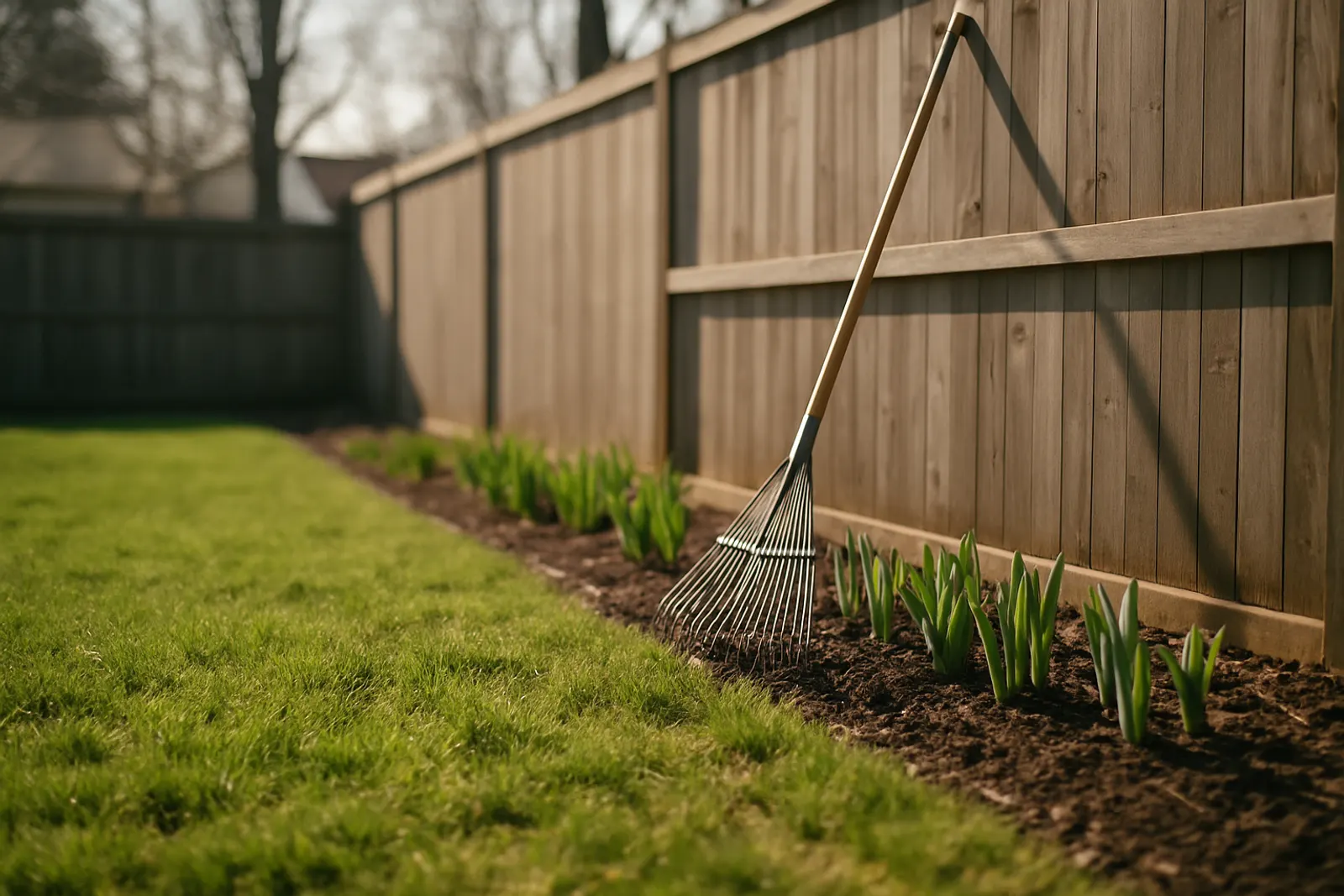
Snow cover mats grass down and leaves a layer of dead thatch that blocks light and air from the crowns underneath. A light rake lifts it and is the difference between a lawn that greens up in three weeks and one that takes six.
Be gentle. Early spring turf is fragile and aggressive raking pulls out live crowns along with the dead material.
3. Look at drainage and compaction
Spring is when you can see where water sits, and standing water is worth fixing before summer for two reasons — it kills turf, and it is where waste residue concentrates.
Also look at the paths your dogs run. The strip along the fence and the route to the back gate are usually compacted to the point where nothing will grow. That is an aeration job, and spring is the time.
4. Flush the urine spots
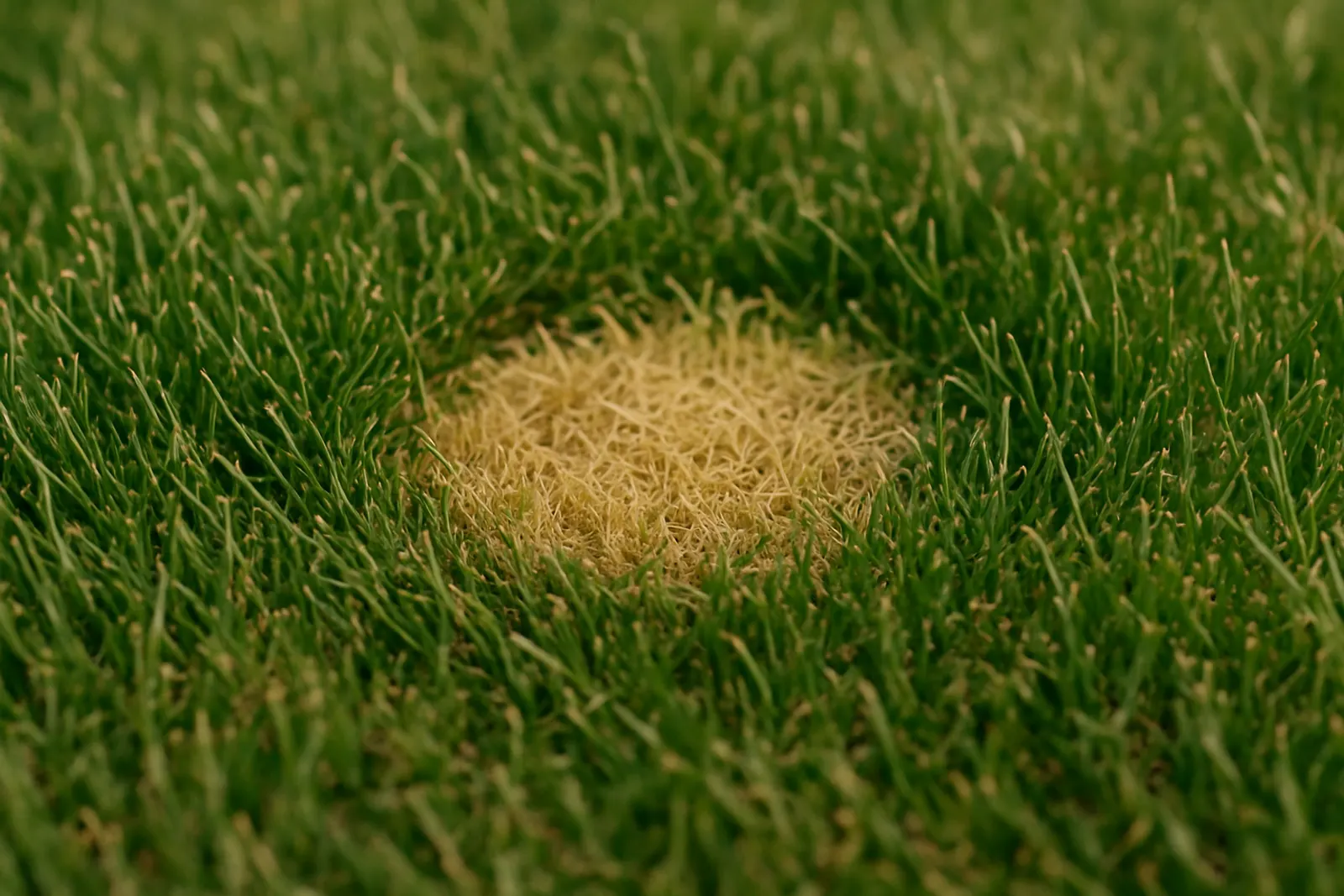
Water the visible burn spots heavily to push accumulated nitrogen and salts down past the root zone. Do this before you seed, not after, or you will flush the seed too.
5. Overseed the damage
Rake out dead patches, top-dress with a thin layer of soil, and overseed with a hard-wearing grass mix. In central Indiana, mid-March to late April is the window for spring seeding, though fall seeding gives better results if you can wait.
Keep dogs off newly seeded areas for a few weeks. This is the part everyone skips and it is the reason most spring overseeding fails.
6. Then treat for odor
Deodorizing and sanitizing go last, once the waste is gone and the yard is raked. Done in that order the treatment works on the residual odor in the turf and soil, which is what it is for. Done first, it is treating something that is about to be disturbed anyway.
7. Then set a schedule so you never do this again
The whole list above exists because of one winter of skipped scooping. Weekly or bi-weekly service through the cold months means March is just another month, and the spring job is a rake and some seed rather than a day of work.
Key takeaways
- Waste removal comes first — everything else is wasted effort until it is done
- Rake matted thatch gently; early spring turf pulls out easily
- Fix drainage and aerate compacted dog paths before summer
- Flush urine burn spots before seeding, not after
- Mid-March to late April is the central Indiana spring seeding window
- Deodorizing goes last, once the yard is cleared and raked
We are a pet waste removal service working Southside Indianapolis — Greenwood, Center Grove, Perry Township, Southport, Beech Grove and the rest of the south side. Weekly plans start at $16.99 and there is no contract on any of them.