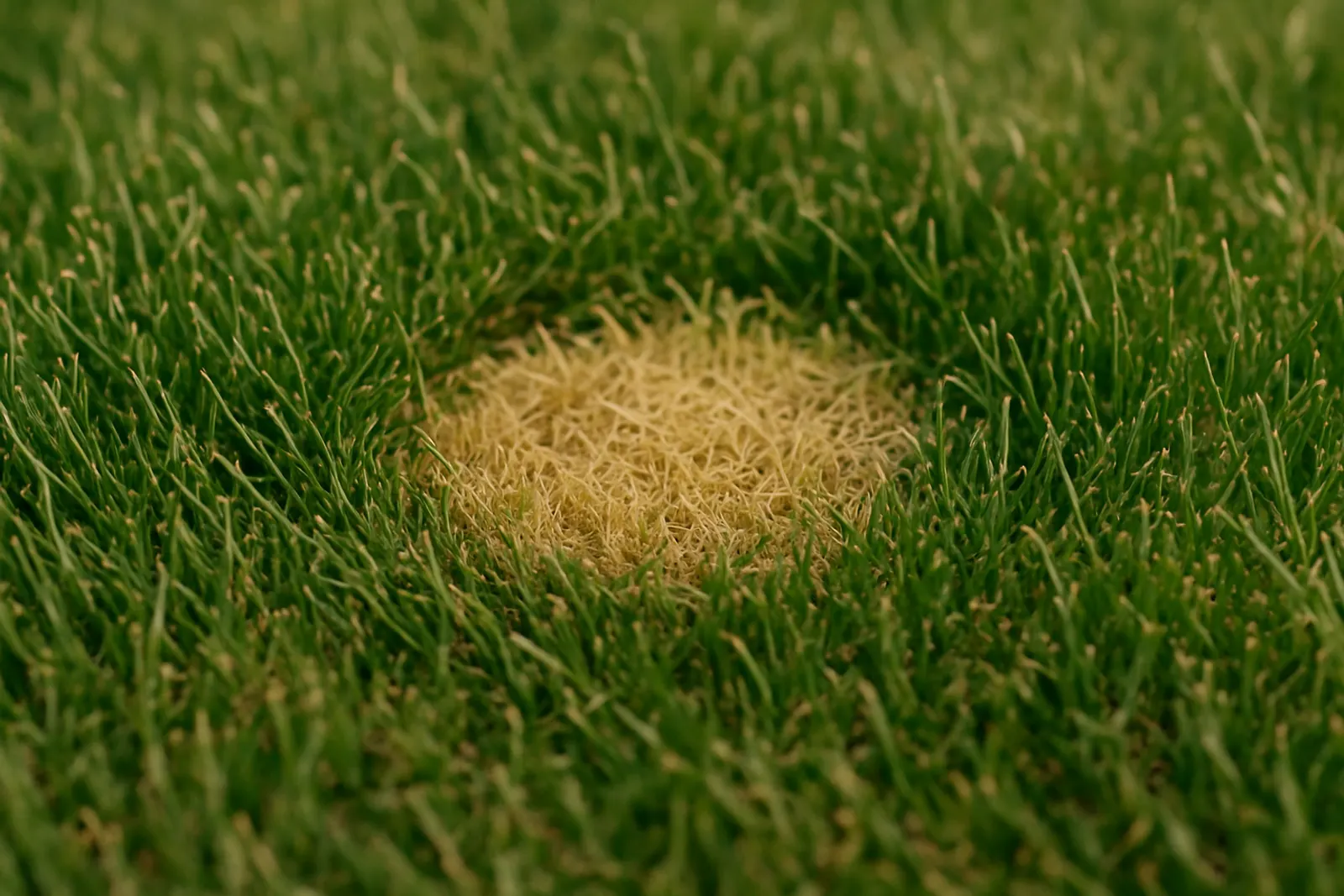
Yes. Dog waste is high in nitrogen and, concentrated in one spot, it burns the grass beneath it — the classic yellow patch with a darker green ring. Urine causes the same damage faster. Neither is fertilizer: dog waste is too acidic and too concentrated, and it takes about a year to break down.
Why the yellow patch has a green ring around it
It is a concentration gradient. At the center, nitrogen levels are high enough to burn the grass and kill it. A few inches out, the same nitrogen has diluted to roughly fertilizer strength and the grass there grows greener and faster than the surrounding lawn.
That is why the damage has such a distinctive signature, and why the ring is often the first thing people notice rather than the dead center.
Waste versus urine — different problems
Urine does its damage almost immediately and is the more common cause of visible lawn spotting. It soaks in and there is nothing to remove after the fact. The only real mitigations are watering the spot promptly, improving drainage, and encouraging dogs to use a designated area.
Solid waste damages more slowly but more persistently, because it sits on the surface smothering the grass while releasing nitrogen into the same square inches for days or weeks.
Removing solid waste promptly prevents most of that damage entirely. Removing it after three weeks does not — the mark is already made.
No, it is not fertilizer
This comes up constantly and it is worth being direct: cow manure works as fertilizer because cattle are herbivores and the manure is composted before use. Dog waste is from a carnivore, it is acidic, it is far too concentrated, and it carries pathogens that composted manure does not.
Left on a lawn, dog waste takes around nine to twelve months to break down. It is not feeding the grass during that time. It is smothering it.
What actually fixes an already-damaged lawn
Remove the source first — nothing recovers while the cause is still sitting there. Then water the affected areas heavily to flush the nitrogen down past the root zone. For established dead patches, rake out the dead thatch, top-dress and overseed. Aeration helps in yards where dogs have compacted the soil along their usual routes.
Deodorizing and sanitizing treatments handle the odor and sanitation side but will not repair turf. Anyone telling you otherwise is selling something.
Prevention, in order of effectiveness
Scoop weekly or better. Water heavily-used urine spots after the fact. Give dogs a designated relief area, ideally gravel or mulch rather than turf. Overseed once a year with a hard-wearing grass. And accept that a lawn shared with dogs will never look like a lawn that is not — the goal is healthy and usable, not immaculate.
Key takeaways
- Yellow patch with a green ring = nitrogen burn from concentrated waste or urine
- Dog waste is not fertilizer — it is acidic, concentrated, and takes 9–12 months to break down
- Prompt removal prevents most solid-waste damage; urine damage is immediate and cannot be undone
- Recovery means flushing with water, then raking, top-dressing and overseeding
- Deodorizing treats smell and sanitation, not turf damage
We are a pet waste removal service working Southside Indianapolis — Greenwood, Center Grove, Perry Township, Southport, Beech Grove and the rest of the south side. Weekly plans start at $16.99 and there is no contract on any of them.