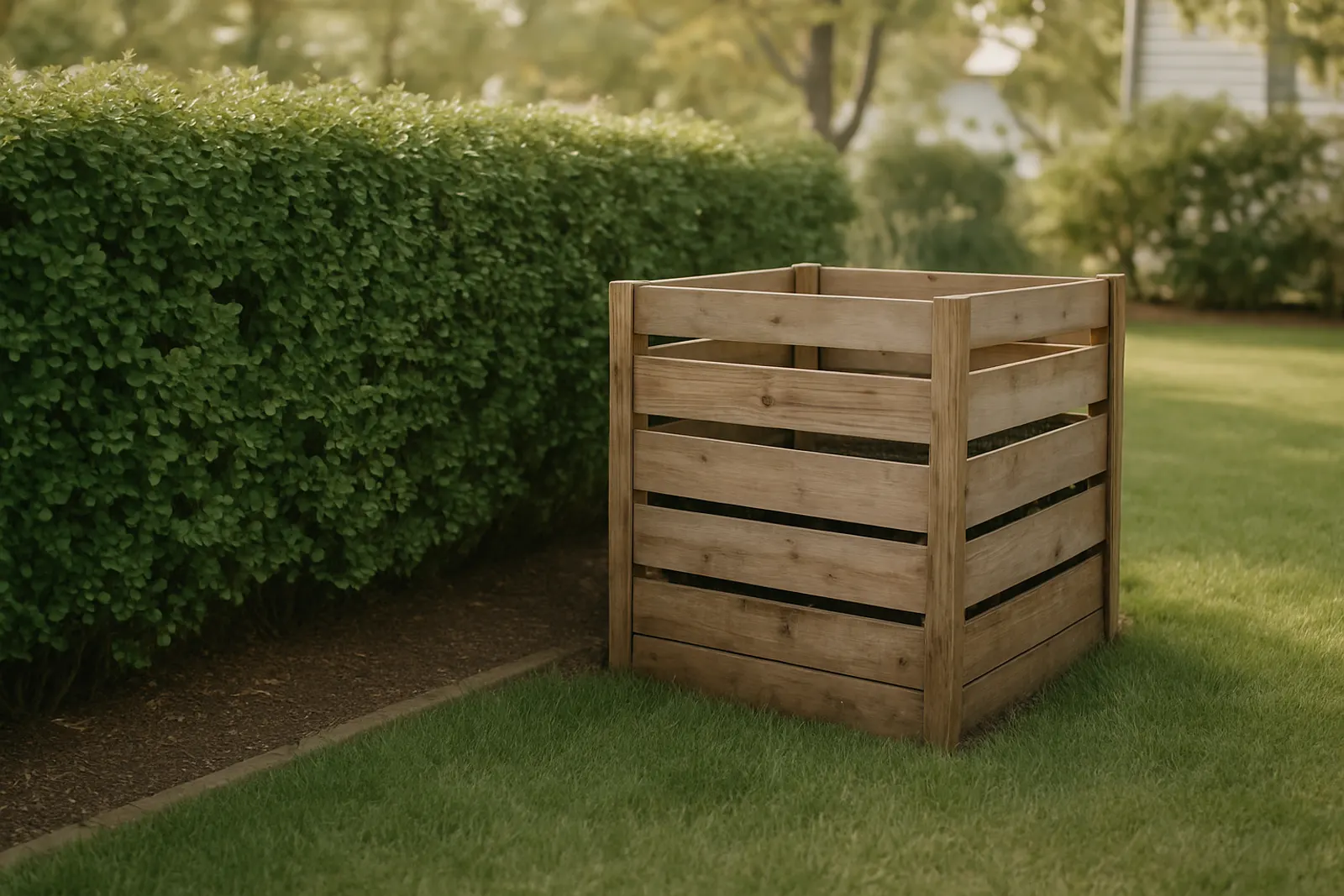
Not in a normal backyard compost pile. Dog waste carries pathogens and parasite eggs that require sustained temperatures around 145°F to destroy, which home compost heaps rarely reach or hold. Never use dog-waste compost on anything edible. Bagging and disposing in household waste is the standard, and safest, route.
Why the temperature matters so much
Composting kills pathogens through heat, not time. Guidance for safely composting pet waste calls for sustained temperatures around 145°F held for several days, and that is genuinely hard to achieve in a domestic heap.
A typical backyard pile that is not actively managed — turned regularly, correctly balanced, large enough to hold its own heat — runs far cooler. It will break the material down eventually. It will not reliably destroy roundworm eggs, which are notably durable, or the other pathogens dog waste carries.
The rule that has no exceptions
Never use compost containing dog waste on anything you intend to eat, and that includes the soil around a vegetable bed rather than just the bed itself. This is the point on which every extension service and public health source agrees, and it is worth treating as absolute.
What about flushing it?
Flushing solid waste is acceptable in many municipal sewer systems, because sewage treatment is designed to handle exactly this. It is generally not advised on a septic system, which is not sized for the extra solid load.
Practically, it means carrying waste through the house, which is why almost nobody does it as a routine for a whole yard.
What about "flushable" or biodegradable bags?
Biodegradable bags break down under industrial composting conditions. In a landfill, buried and starved of oxygen, they behave much like a normal bag. They are a modest improvement, not a solution, and they are not a license to leave the bag anywhere other than a trash can.
The genuinely more important thing is that the waste gets picked up at all. A conventional bag in a trash can beats a compostable bag left on a fence post, which is a thing that happens on every walking trail in the county.
What we do with it
Everything we collect is double-bagged, loaded into the truck, and disposed of off your property through normal waste channels. Nothing goes into your trash can and nothing is composted on site.
That is deliberate. Leaving a week of collected waste in a customer's trash can in July recreates the smell problem we were hired to remove, roughly six feet from the back door.
The bigger disposal point
The EPA has classified pet waste as a non-point source pollutant since 1991 — the same category as urban oil runoff and agricultural chemicals. Waste left on the ground washes into storm drains and from there into local waterways untreated. Whatever route you choose for disposal, the important part is that it comes off the grass.
Key takeaways
- Backyard compost heaps do not reliably reach the ~145°F needed to destroy pathogens
- Never use dog-waste compost on or near anything edible — no exceptions
- Flushing is fine on municipal sewer, generally not advised on septic
- Biodegradable bags need industrial composting; in landfill they behave like normal bags
- We haul everything off site rather than leaving it in your trash can
We are a pet waste removal service working Southside Indianapolis — Greenwood, Center Grove, Perry Township, Southport, Beech Grove and the rest of the south side. Weekly plans start at $16.99 and there is no contract on any of them.